
This article has been translated with DeepL.
How gender bias determines which innovations become reality
- Published: 22 Jan 2026,
- 9:24 AM
- Updated: 22 Jan 2026,
- 9:24 AM
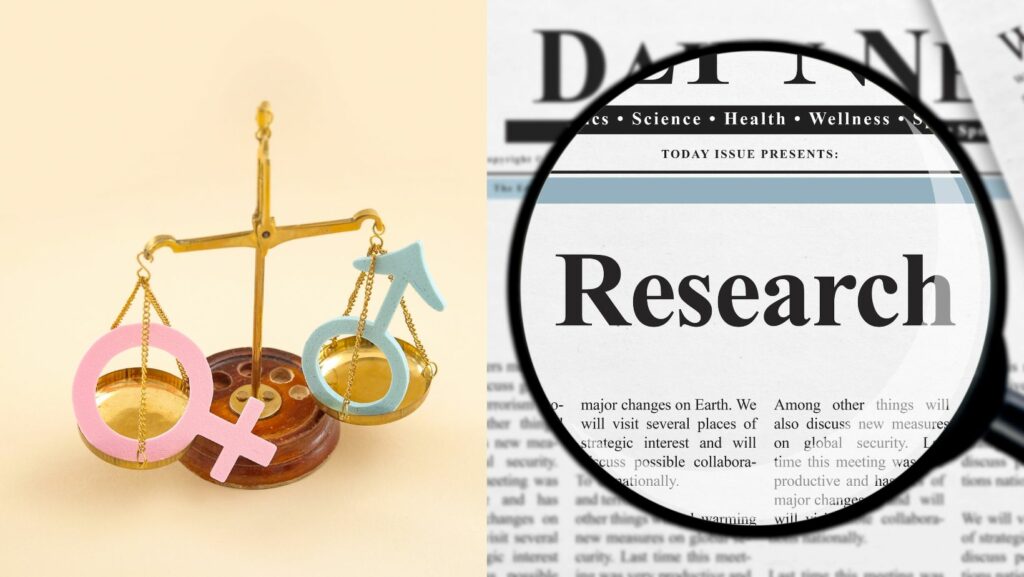
Inventors are less likely to build on scientific ideas from women. This doesn’t just mean that the work of women scientists has less impact. It also affects the type of innovations that are developed – and those that are not.
The researchers behind the study, published in the top-ranked scientific journal Administrative Science Quarterly, analyzed more than ten million scientific articles and over one million US patents. The results are clear: papers written by women are less likely to be cited in patents than papers written by men, even when controlling for a range of factors such as the researcher’s experience, the number of collaborators or the quality of the journal. The difference also persists in comparisons where researchers, regardless of gender, published almost identical scientific ideas at the same time.
Women’s research receives less attention
The study shows that the differences are mainly driven by demand-side mechanisms – that is, the amount of attention and value inventors attribute to research. In an experiment where 400 PhD researchers were asked to read the same scientific abstract, participants rated the research as more important when the lead author was perceived as male. They also spent more time reading the text. The researchers interpret this to mean that ideas from female scientists receive less attention and thus have a lower chance of becoming part of new technologies.
The consequences reach far beyond academia. If inventors are less likely to use scientific results from women, it affects the direction of innovation. For example, the report highlights that female researchers are more likely to focus on diseases that are more likely to affect women. If such research is not taken further into technology and product development, solutions to these problems are less likely to be developed.
More women in academia will not solve the problem
The researchers suggest that this may explain why some types of innovation – particularly those addressing women’s needs – are historically underdeveloped. At the same time, the study shows that simply increasing the representation of women in research is not enough. If their ideas are not given the same attention, important knowledge risks being lost before it is translated into practical benefits.
The conclusion is that gender bias in how scientific knowledge is evaluated affects which ideas become the technologies of the future. For organizations, companies and societal actors that want to strengthen innovation capacity, the results mean that search behaviors and evaluation processes may need to be reviewed. A broader and more inclusive coverage of the research frontier can lead to more discoveries – and more solutions to societal challenges that might otherwise be overlooked.
More about the article and the authors
The article Standing on the Shoulders of (Male) Giants: Gender Inequality and the Technological Impact of Scientific Ideas is published in the scientific journal Administrative Science Quaterly (ASQ). The authors are Michaël Bikard and Ronak Mogra, both at INSEAD, and Isabel Fernandez-Mateo, London Business School.