
This article has been translated with DeepL.
Hello there, David Audretsch—what does entrepreneurship have to do with democracy?
- Published: 15 Sep 2026,
- 8:43 AM
- Updated: 15 Sep 2026,
- 8:43 AM
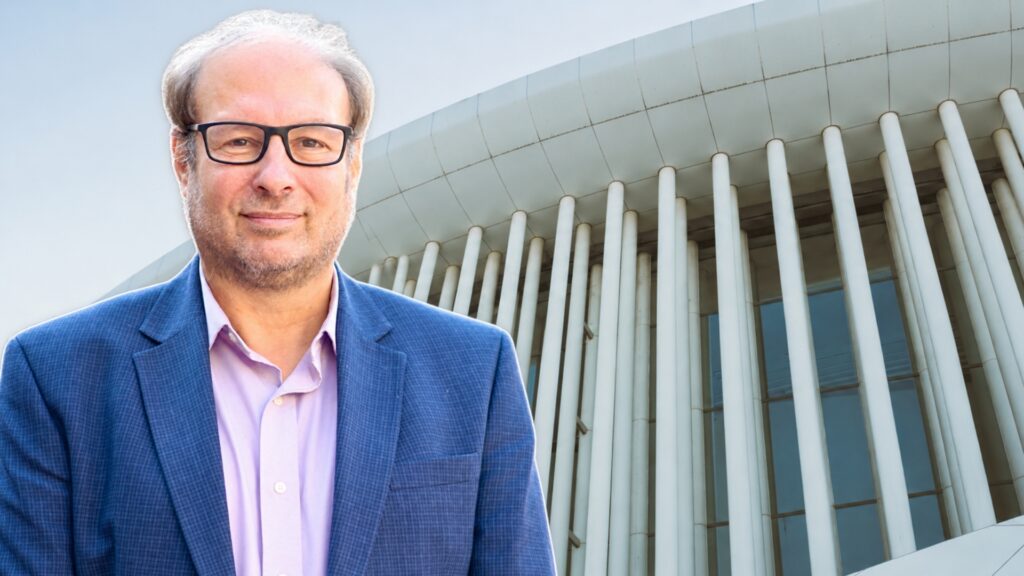
What role can entrepreneurship play for democracy? That question has become increasingly important to Professor David Audretsch at Indiana University. Ahead of Esbris’ webinar , Entrepreneurship Beyond Technology: Power, Institutions, and Democracy, we asked him why power, institutions, and democracy have become increasingly important in his research.
You have been researching entrepreneurship and innovation for several decades. Why have issues of power, institutions, and democracy become increasingly important to you?
– In the past, many people in the Western world took democracy for granted. It seemed self-evident. But over the past decade, that picture has changed. Democracy has come under pressure, not just in individual countries but more systematically—both in the Western world and globally.
– Research plays its greatest role when it helps us understand problems that really matter. A generation ago, the question was how we could spur entrepreneurship. Now we also need to understand how entrepreneurship can contribute to a society built on a solid democratic foundation.
Entrepreneurship is often associated with technology, startups, jobs, and economic growth. What are we missing if we view entrepreneurship primarily in that way?
– Entrepreneurship is closely linked to technology, startups, jobs, and economic growth. But it’s not just about that. It also influences how society functions and how people relate to one another—both as individuals and as part of a society.
– Entrepreneurship is not just an economic function. It both shapes and reflects society.
You have also highlighted how entrepreneurs can challenge established solutions. How do you view that role—and the power of the players who are already established?
– Take the personal computer as an example. Computers were originally developed for use by a handful of experts, and most people would never even come into contact with a mainframe.
– Xerox developed a personal computer early on, but the company never really took the idea that people would want their own computer seriously. Many other large and dominant technology companies reasoned in the same way. It took entrepreneurs like Steve Jobs and Steve Wozniak—and their startup, Apple—to demonstrate the value of the personal computer.
– This is where issues of power also come into play. As the philosopher Michel Foucault observed, power is everywhere. Power influences which entrepreneurial ideas receive the resources and opportunities to develop. Resources tend to go to ideas that align with prevailing power structures, while those that challenge them may face resistance.
– The significance of power has received far too little attention in entrepreneurship research.
What does all this have to do with democracy?
– Democracy promotes entrepreneurship. But it also works the other way around—entrepreneurship supports democracy. What unites them is individual autonomy. Both democracy and entrepreneurship are based on people being able to make their own decisions, without external coercion, and then act on them.
Many countries and regions want to create more startups and more entrepreneurs. Is that still a good goal?
– Generally speaking, yes. Entrepreneurship acts as a counterforce that challenges the status quo and introduces new ideas and new ways of doing things. But every context is unique, with its own opportunities and needs. That is why democratic governance is so important for entrepreneurship policy as well. Society’s priorities and entrepreneurship policy need to be aligned.
What do you hope participants will take away from the webinar?
– That entrepreneurship means much more than what happens to the individual entrepreneur, the company, the industry, or the economy. It helps shape society and realize the ambitions we have as a society.
– It may even be the case that the entrepreneurial mindset is at least as important as its concrete manifestations in the form of new and small businesses.
On October 6, David Audretsch will participate in Esbri’s webinar Entrepreneurship Beyond Technology: Power, Institutions, and Democracy. The webinar will be conducted in English and is free of charge.