
This article has been translated with DeepL.
Sustainable innovation can be stopped by the calculative practices
- Published: 6 Feb 2026,
- 9:10 AM
- Updated: 6 Feb 2026,
- 9:12 AM
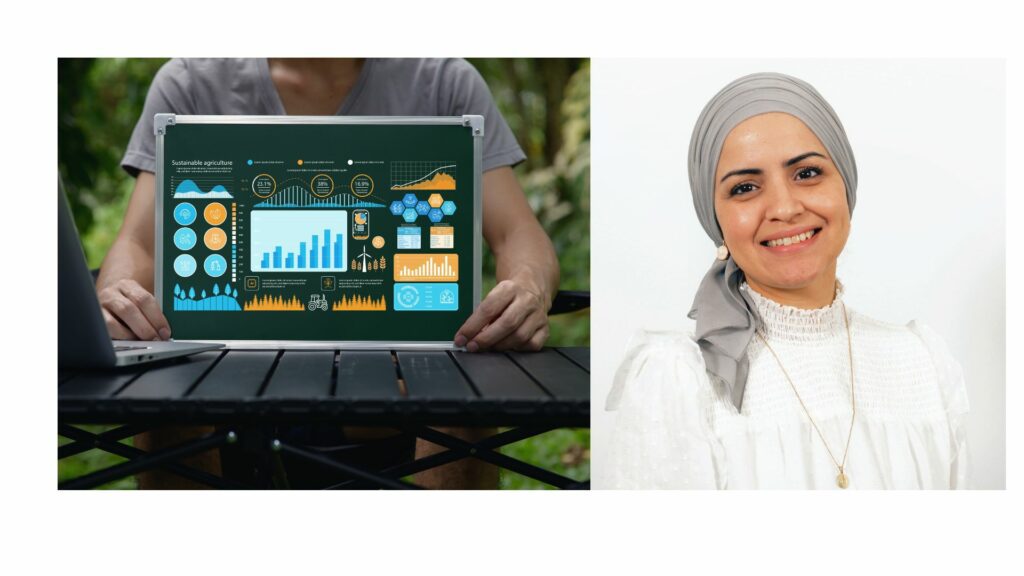
The way companies calculate costs and profitability can slow down – or speed up – sustainable innovation. The key is to make visible the value sustainable solutions actually create and the costs that otherwise remain hidden, says Amal Kanzari at Linköping University.
Businesses face a dual challenge. They need to reduce their impact on the environment and contribute to sustainability, while remaining profitable. Circular business models and eco-innovation – innovations that reduce environmental impact and contribute to sustainable development – can be solutions.
One challenge is how companies make calculations during the innovation process. How companies calculate, measure and value their investments determines the types of innovations that can be developed.
– I wanted to see how calculations and what is included in them could be changed or adapted to enable eco-innovations. The calculations are not neutral. They determine which eco-innovations companies invest in and which they opt out of, says Amal Kanzari, who studied the innovation processes of some large Swedish manufacturing companies in her doctoral thesis.
Invisible values fall away
In other words. What is included in the calculations is visible, discussed and prioritized. What is excluded never becomes part of the decision making basis. If environmental impacts, life-cycle perspectives and future value are not included in the figures, they also become difficult to defend in competition with projects that are profitable in the short term.
– Traditional costing often focuses on the cost of production, selling price and profit in the here and now. They rarely capture values that arise later, in the customer or in society. Therefore, we need to move from a narrow product focus to a more value-based and life-cycle oriented approach.
Such an approach means, for example, including:
• Life-cycle costing: include costs and benefits throughout the life of the product or solution.
• Environmental costs: include costs for emissions, waste and resource consumption.
• Hidden costs: make visible costs that exist but are rarely visible in calculations.
When downtime is more expensive than you think
She illustrates hidden costs with a concrete example.
– Industrial downtime means lost production, delays and sometimes even a loss of customer confidence. Yet these costs are not included in the calculations.
– If a company, as part of its circular business model thinking, develops solutions that eliminate downtime, they reduce large, but often invisible, costs for the customer. When these values are included in the calculations, the sustainable solution suddenly appears more profitable.
It also means thinking differently about pricing. Instead of taking the costs of producing the product or service and adding a margin, value-based pricing can help bring other values to the fore in the calculations.
– Value-based pricing is based on how much customers are willing to pay for the value delivered by the product or service. The producing company then manages its costs.
– For companies that want to change, it’s not just about new innovations. It’s about starting to calculate in new ways, says Amal Kanzari.
What will you do after your thesis?
-Thanks to a three-year scholarship from the Catharina Högbom and Michael Cocozza Foundation for Research and Culture, I can continue as a postdoc. Now I will continue to work in the borderland between financial management and innovation management and, among other things, study how different values can be made visible with the help of calculation.
– In the future, I would like to get in touch with innovation leaders and other people working on innovation in mainly medium and large companies – so please get in touch, Amal Kanzari invites.
Contact amal.kanzari@liu.se
4 ways to let financial management support eco-innovation
• Cooperation with stakeholders. We need to work with customers, banks, investors and researchers to better understand what and how to measure in ways that promote eco-innovation.
• Guidelines and training. Practitioners need guidance on what should be included in assessments of circular solutions, and future economists need to be trained in more flexible approaches.
• Strategic engagement. Management support is crucial to accept uncertainty and long-termism.
• Regulation and policy instruments. When emissions, environmental impacts and the like are priced, they are easier to include in calculations.
More about the thesis
Amal Kanzari will defend her doctoral thesis on February 6, 2026. She is a PhD student at the Department of Management and Engineering at Linköping University.
Title of the thesis: “When numbers perform: The performativity of calculative practices in shaping eco-innovation”.