This article has been translated with DeepL.
OP-ED: The service sector is Sweden’s future export engine – now small businesses must be strengthened
- Published: 15 Jan 2026,
- 10:15 AM
- Updated: 15 Jan 2026,
- 10:19 AM
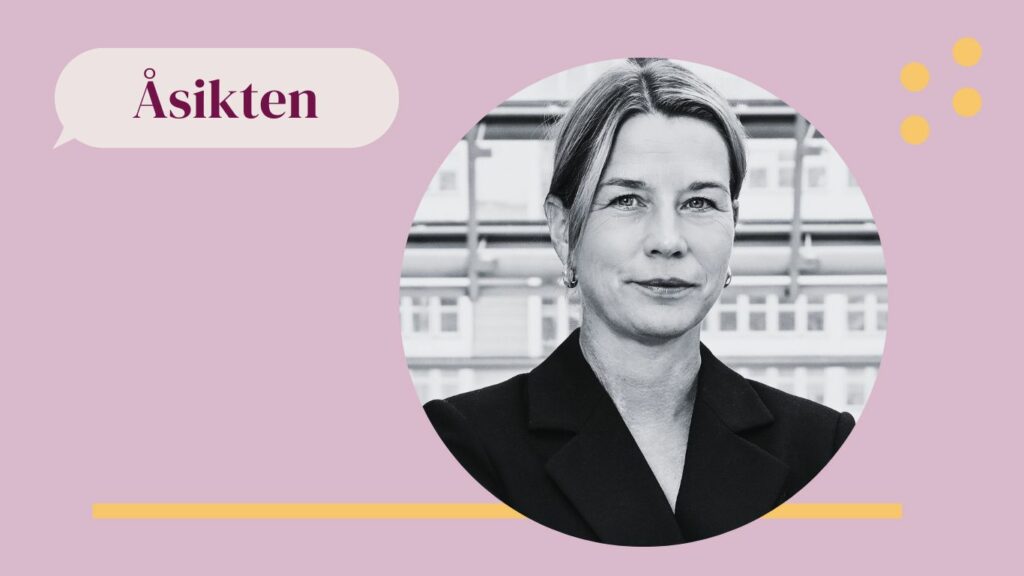
Exports of goods are slowing down and exports of services are increasing. Lena Sellgren, Chief Economist at Business Sweden, gives a progress report and calls on the government to develop an industrial and export policy that provides better conditions for small and medium-sized service companies.
As the global economy has slowed in recent years, a pattern has become clear: exports of goods are losing momentum while exports of services continue to grow. This is despite geopolitical turmoil, weak global demand and a subdued economy – a development that should ring alarm bells for anyone still leaning on yesterday’s industrial logic, but also hope to grow. Services are becoming the new global growth currency.
Sweden is emerging as a service nation to be reckoned with.
Today, world services exports account for around a third of the value of global goods exports – and their importance is growing. Europe is the largest services region in the world, Asia is growing and North America remains strong. But perhaps most remarkably, Sweden is now emerging as a services nation to be reckoned with.
Swedish service exports growing rapidly
According to Business Sweden’s report “New horizon for Swedish service exports“(Global export Tjanster – Business Sweden), Swedish service exports increased by over 12 percent in 2024, significantly faster than both the rest of the world and Europe. Sweden climbs to 19th place in the world. It’s not just a number – it’s a sign of strength. At a time when many countries are struggling with stagnation, Swedish service companies continue to deliver, grow and gain market share.
What is behind the success? The answer is as clear as it is inspiring. Sweden has built services exports based on three strong drivers: an ecosystem of multinational headquarters, world-leading digital services and new business models in manufacturing where servitization and innovation go hand in hand.
It is this combination that makes Sweden unique and competitive. Almost two-thirds of our services exports are in business services, IT and telecoms, and other knowledge-intensive services. These are areas where global demand is growing and where Sweden is already ahead of many competitor countries.
Our future competitiveness will be built in the service economy.
Our position in digital services is particularly clear and strong. In the ‘personal services’ category, which includes streaming, gaming and other digital entertainment, Sweden accounts for a full 7% of global exports. We are also strong in R&D services, where our innovative strength and research environments give us an advantage.
Small and medium-sized enterprises drive development
All this points to one direction. Our future competitiveness will be built in the service economy, not in yesterday’s industrial logic. But then we must also dare to see who is driving development. It is not just the large, well-funded companies backed by international groups. It is very much the small and medium-sized enterprises. They are often the first to develop and test new digital solutions, while large companies are often better at scaling up and commercializing them widely. As a result, they complement each other well in the innovation system.
The service sector is not a parenthesis in the Swedish economy.
In a world where digital services are growing rapidly, this is a strategic advantage. Small businesses can become big exporters – without having to build factories or handle containers. Sweden now has a golden opportunity to consolidate its role as a global service economy.
But then we in Sweden must give our small and medium-sized service companies the right conditions. The government must have a business and export policy that reflects the logic of the service economy: better internationalization support, faster access to skills, and an innovation climate where ideas can grow – not get stuck.
The services sector is not a parenthesis in the Swedish economy. It is our next big export success. Let’s give our small and medium-sized enterprises the chance to take full advantage of that opportunity!
Lena Sellgren
Chief Economist, Business Sweden